Who runs it, how it sustains itself, and the standards behind every answer it gives.
Contamination matters are decided by scientific evidence that most of the people who need it do not have ready access to — scattered across epidemiology, toxicology, hydrogeology, analytical chemistry, and the case law that governs whether any of it will be heard.
The Environmental and Toxic Tort Institute exists to converge that knowledge and make the first hour of understanding free. Anyone with a contamination or toxic tort matter can use the Institute’s research concierge at no charge: it asks what the substance was and who was exposed, explains what a causation showing actually requires, identifies which disciplines do that work, and says plainly what evidence should be secured before a site changes and it is gone for good.
When a matter needs more than orientation — an exposure reconstruction, a causation opinion, a data usability review, or testimony — the Institute connects you with the right specialist, usually within one business day.
The research assistance is free and stays free. When a matter requires a retained expert — for an exposure reconstruction, a causation analysis, a data review, an advisory engagement, or testimony — the Institute arranges the engagement through its expert network and is compensated for that work.
That is the entire business model. We publish it because visitors who cross-examine people for a living should not have to guess.
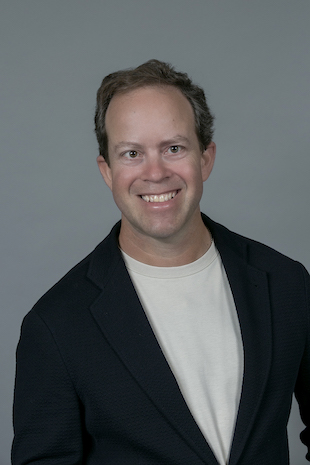
Russ Rosenzweig was named Executive Director of the Environmental and Toxic Tort Institute in August 2026. Russ was one of the pioneers of the expert witness industry and has decades of experience helping clients understand complex technical disputes and connecting them with the right experts and knowledge bases.
He founded the first expert witness search and referral firm in 1993 and led it for three decades, connecting thousands of attorneys, insurers, and companies with specialized experts. His clients have included most of the largest law firms in the United States.
B.A., Northwestern University · M.B.A., University of Chicago Booth School of Business
Contamination matters rarely sit inside one discipline. An exposure reconstruction may need a hydrogeologist to model transport, an analytical chemist to attribute the source, an industrial hygienist to establish what a person actually received, and a toxicologist and an epidemiologist to address whether that dose means anything — with each opinion having to withstand challenge on its own.
The Institute draws on a working network built over thirty years across those disciplines, from academia, industry, government laboratories and consulting practice. Experts are engaged matter by matter and remain independent. The Institute’s role is to find the right one quickly, and to assemble the team when a matter crosses fields.
The Institute explains what a causation showing requires and which disciplines establish it. It does not conclude that the showing is met. That line is written into the concierge’s operating rules and holds on every conversation.
Nothing here addresses an individual’s health. If someone describes their own illness, the concierge is instructed to say so plainly and point them to their own physician before anything else — not as a disclaimer at the end, but first.
Regulatory values move, and some are actively contested — the federal PFAS drinking water rules were mid-rulemaking through 2026. This site names frameworks and describes what is unsettled rather than printing numbers that will quietly age into being wrong.
Contamination evidence is perishable in a way documents are not. Where a site is about to be remediated, demolished or closed, the Institute says so early and plainly, because that window does not reopen.
The Institute uses AI to research, draft, and power the concierge, under human editorial direction. We think institutions should say so plainly.
Errors, once known, get fixed. If something on this site is wrong, tell the Institute and it will be reviewed and corrected.
Start free with the research concierge, or go straight to a human expert.